%20PNG%20FILE%20(a.png)
Biggest Residential Lighting Takeaways from 2025 and How They Shape 2026

Residential lighting is entering a new era. What once was an afterthought in home design has now become one of the core features that defines atmosphere, comfort, wellness, and luxury. As 2025 comes to a close, it is clear that lighting is no longer just a finishing touch. It is now a strategic design element that influences how people feel, live, and experience their home every day.
For homeowners, designers, and builders planning projects in 2026, understanding the lessons from the past year is essential. Connected Home Inc. works closely with leading lighting brands such as Ketra, Colorbeam, DMF Lighting, and WAC Lighting, which gives us an inside look at how residential lighting is evolving and what you can expect next.
Below is a deeper look at the biggest takeaways of 2025 and how they are shaping what is coming in 2026.
1. Lighting and Wellness Became Fully Connected

For years, designers talked about human centric lighting. In 2025, it finally reached true maturity. Homeowners began to understand that lighting affects far more than visibility. It affects energy levels, sleep cycles, productivity, and mood. Brands like Ketra pushed this forward with full spectrum tunable lighting that closely replicates natural daylight patterns.
These systems shift color temperature and intensity throughout the day. Morning light is bright and crisp to help you wake up. Midday light supports focus and productivity. Evening light warms and softens to prepare the body for rest. This is not a trend. This is a new standard. With growing awareness about circadian health and emotional wellness, more homeowners are requesting lighting systems that support their overall well being rather than simply illuminating a room.
2. Architectural Lighting Replaced Traditional Fixtures
In 2025, recessed cans and bulky fixtures continued to fade while linear lighting and architectural sources became the main characters in luxury homes. Brands like Colorbeam and WAC delivered slim, minimal, integrated luminaires that blend into ceilings, walls, and millwork. The focus shifted from seeing the fixture to experiencing the light itself.
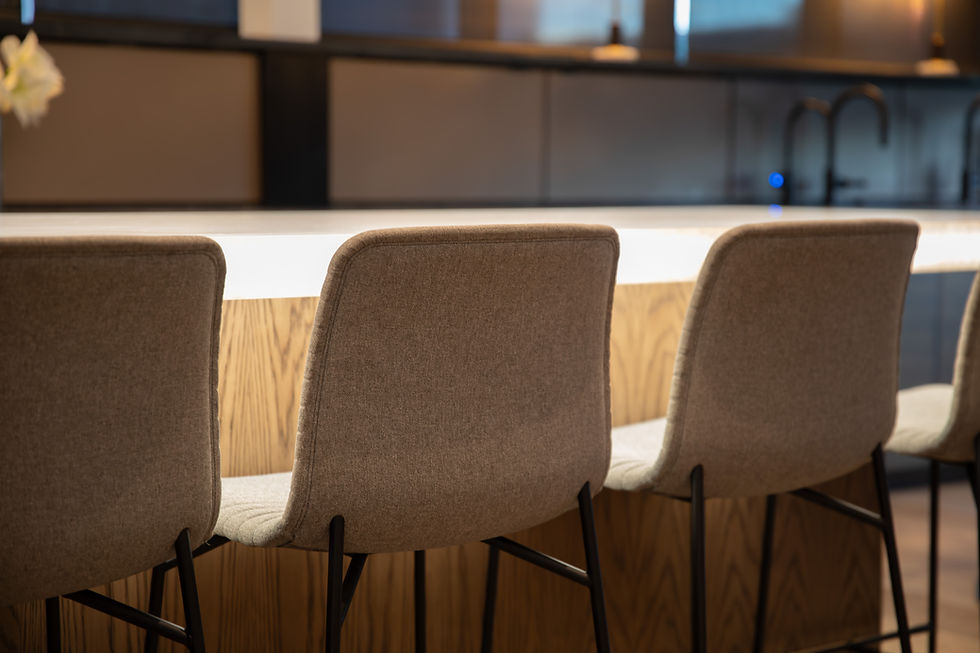
Cove lighting, wall grazing, under cabinet lines, and hidden LED reveals created subtle but powerful effects that shaped the character of each room. Instead of a single fixture in the center of a room, lighting now works in layers that support the room’s purpose. This trend grew quickly because it offers clean aesthetics, enhanced depth, and a more immersive atmosphere.
In 2026, more homes will be designed with lighting that is planned during the architectural phase, not added at the end. Homeowners want modern, intentional design. They want their lighting to look as beautiful off as it does on.
3. Lighting Became Part of the Whole Home Ecosystem
Smart home technology in 2025 reached levels of integration that connected every part of the home. Lighting was no longer separate from climate, shading, entertainment, or security. Instead, lighting became a key part of the automated home experience.
DMF Lighting and WAC expanded their control ready solutions, making it easier to integrate with platforms such as Savant, Control4, and other automation leaders. Homeowners began to expect lighting scenes that tied into routines. For example, arriving home triggers pathway lights, calming audio, and a comfortable temperature. A single bedtime scene can dim lights, close shades, arm security, and lower the thermostat.
This complete integration will be the expectation in 2026. Homeowners want simplicity and consistency. They want control that feels intuitive rather than overwhelming.
4. Personalization Became the Standard

Customization was once associated with only high end design. In 2025, clients at many price points expected personalized lighting scenes, accent colors, and dynamic control. Brands such as WAC and Colorbeam allowed for complete tuning of hue, saturation, and intensity. This gave homeowners the freedom to set any desired mood.

Some homes used soft candlelight tones for dinners, crisp white tones for work, and vivid colors for entertaining. Others used subtle accent lighting to highlight art, architecture, or decor. No two homes looked alike. Lighting became a form of expression rather than a generic utility.
As we move into 2026, homeowners will continue to seek lighting that reflects their personality, lifestyle, and emotional needs. The demand for adaptability will grow even stronger.
5. Efficiency, Sustainability, and High Quality Coexisted
2025 marked a turning point in the conversation about sustainability. High end homeowners no longer wanted luxury lighting that consumed excess energy. They wanted efficiency and environmental consideration without compromising beauty or performance.
Brands like DMF and WAC advanced their optical design, offering low wattage LEDs with high CRI, low glare, and superior beam control. Homeowners discovered that they could enjoy premium quality light while significantly reducing power consumption.
In 2026, expect more interest in energy monitoring, low voltage systems, and intelligent power management that aligns with lighting upgrades.

What This Means for 2026
The biggest shift from 2025 is the mindset. Lighting is not viewed as a technical component. It is viewed as an experience. The homes of 2026 will be:
more integrated
more wellness focused
more architecturally driven
more dynamic
more efficient
and more personalized
Brands like Ketra, Colorbeam, DMF, and WAC will continue leading the transformation, offering technology that elevates comfort, design, and daily living.
Connected Home Inc. is dedicated to staying ahead of these trends. Our team works with homeowners, builders, and designers to create lighting systems that support modern living with elevated performance and thoughtful design.
If you plan to renovate, build, or upgrade in 2026, now is the perfect time to rethink how lighting can shape your home. Lighting is not just something to see. It is something to feel.


Comments